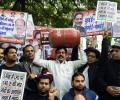
The rate of price rise for food articles stood at 11.51 per cent during January as against 2.41 per cent a month earlier, while for non-food articles it rose nearly three-fold to 7.8 per cent from 2.32 per cent in December, the data released by the ministry of commerce and industry on Friday showed.

Hyderabad-based Andhra Bank is aiming to get a significant proportion of the state government's business, to boost its share of low-cost deposits
Since end-May there has been volatility in the foreign exchange market.

'The big power struggle in faraway Europe erupted at a most critical juncture when India has been increasingly sceptical about American policies and statesmanship,' argues Ambassador M K Bhadrakumar.
However, RBI would continue to nudge banks to cut lending rates

Macroeconomic factors under control, says Rajan

The fourth consecutive rate cut is expected to lower equated monthly instalments (EMIs) for home and auto buyers, and borrowing cost for corporate.

The RBI governor is focused on growth, and keeping rupee slightly depreciated is part of that 'Atmanirbhar Bharat' strategy.
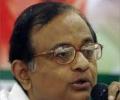
The Reserve Bank of India, in its Second Bi-Monthly Monetary Policy Statement for 2014-15, kept the key interest rate unchanged at 8 per cent.

Fitch Ratings has revised India's GDP growth estimate to 12.8 per cent for the fiscal year beginning April 1 from its previous estimate of 11 per cent, saying its recovery from the depths of the lockdown-induced recession has been swifter than expected. In its latest Global Economic Outlook (GEO), Fitch said revision is on the back of "a stronger carryover effect, a looser fiscal stance and better virus containment." "India's second half of 2020 rebound also took GDP back above its pre-pandemic level and we have revised up our 2021-2022 forecast to 12.8 per cent from 11.0 per cent," it said. "Nevertheless, we expect the level of Indian GDP to remain well below our pre-pandemic forecast trajectory."
Beyond the fourth quarter of 2019, the report does not see space for further cuts primarily as headline inflation is likely to pick up and cross the 4 per cent target by the end of the year, and output gaps are also estimated to close.
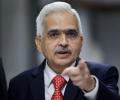
Reserve Bank Governor Shaktikanta Das on Wednesday said underlying economic activity in India continues to be strong, but external factors will cause some "dent" to the economy. Speaking at the BFSI Insight Summit 2022 organised by Business Standard, Das said the RBI tracks 70 fast moving indicators and most of them are in the "green box". It is the external sector, mired by a fear of recession or clear visibility about slowing growth in a large part of the world, where the challenges lie, he said, adding that the impact of external demand will "dent" the economy.

A drop in inflation rate to below 5 per cent and moderation in industrial production growth to 11.1 per cent, could imply that the Reserve Bank of India may maintain status quo in its quarterly monetary policy this month-end.

Rajan has ignored pressure to loosen policy.

This is the biggest one-day fall in the rupee since August 3, 2016
The Reserve Bank kept bank rate unchanged at 6 per cent, short-term borrowing (reverse repo) was kept intact 6 per cent, lending (repo) at 7.75 per cent. Cash Reserve Ratio, a statutory deposit by commercial banks with the central bank, was retained at 7.5 per cent.

'Investors hate uncertainty and the demonetisation move certainly creates that.'

The RBI, which has been keeping rates at an elevated level citing the high inflation, wants to bring it down to 6 per cent by January 2016.

Of the six-member rate-setting monetary policy committee, five members voted for a 25 bps cut while one by 40 bps, the RBI said.
According to Soumya Kanti Ghosh, chief economic advisor of the State Bank of India group, a 50 bps rate cut is a possibility, but 25 bps is more likely.

While a pick-up in summer monsoon rains in recent weeks is expected to cool food inflation, most analysts don't anticipate another rate cut before a new governor is on the job

Equity indices made an emphatic comeback on Friday after falling for seven straight sessions after the RBI hiked interest rates by 50 basis points on expected lines and projected inflation coming under control from January next year. A strong recovery in the rupee added to the momentum, traders said. Overcoming a wobbly start, the 30-share BSE Sensex soared 1,016.96 points or 1.80 per cent to settle at 57,426.92. During the day, it rallied 1,312.67 points or 2.32 per cent to 57,722.63.

After opting for status quo in policy rates, Reserve Bank Governor Raghuram Rajan on Tuesday said any more cut will depend on further transmission of previous rate cuts by banks, softening in inflation and progress of monsoon.

This is the fifth straight cut in rates by the Reserve Bank of India in as much policy reviews in 2019, and takes the total quantum of reductions to 1.35 per cent.

The Bank Nifty is high beta anyhow and it could move the broader market.

The RBI has made serious attempts to improve fiscal deficit.

The move may release funds locked in government securities and add to liquidity. With inflation expectations lowered, this should not impact bond sentiment in the short run
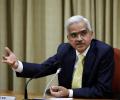
The Reserve Bank of India (RBI) on Friday decided to leave the benchmark interest rate unchanged at 4 per cent but maintained an accommodative stance, implying rate cuts in the future if need arises to support the economy hit by the Covid-19 pandemic.

'They can transition from short to long-duration funds when the yield curve normalises.'

Concerned over elevated inflation, Reserve Bank of India on Friday decided to leave the benchmark interest rate unchanged at 4 per cent but maintained an accommodative stance, implying more rate cuts in the future if need arises to support the economy hit by the Covid-19 pandemic.

RBI should monitor export credit offtake and how well banks implement its instruction.

Bankers said high interest rate could make Indian economy sluggish given that inflation is around 5%

After hiking interest rates thrice between September 2013 and January 2014, the central bank has maintained status quo, amid slowing economic growth.

'New record for the Nifty50 is only a question of when.'
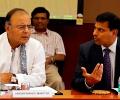
Raghuram Rajan explains the rationale for his policy stance and other issues.
The economy is gaining traction with gradual pick up in manufacturing activity and moderation in contraction of services, spurred by comfortable liquidity conditions, an RBI article on Tuesday said. Observing that the retreat of the second wave of coronavirus pandemic has been slow, the RBI in an article on the 'State of Economy' said, the aggregate demand conditions are buoyed by the release of pent-up demand post unlock, while the supply situation is improving with the monsoon catching up to its normal levels and sowing activity gaining pace. "Reaffirming the traction that the economy is gaining, the manufacturing activity is gradually turning around, while contraction in services has moderated.

SBI is the first major state-run bank to hike lending rates after short-term rates rose as a result of the Reserve Bank of India's liquidity tightening moves announced in July.
Of the 52 economists polled, 50 expect the policy repo rate to remain at 7.25 per cent, and 47 of 48 respondents see the cash reserve ratio, or the portion of deposits banks have to maintain with the central bank, unchanged at 4 per cent.

RBI also retained its GDP growth forecast at 7.6 per cent

Equity indices fell on Thursday, mirroring weak global market trends following the US Federal Reserve's interest rate hike and hawkish stance. The 30-share BSE Sensex declined 337.06 points or 0.57 per cent to settle at 59,119.72. During the day, it tanked 624 points or 1.04 per cent to 58,832.78. The NSE Nifty went lower by 88.55 points or 0.50 per cent to end at 17,629.80.
